

A Website for a University Research Group
Giving structure to people, projects, and scientific knowledge.
In short
A university research group entrusted me with designing and building their institutional website. The challenge was to organize complex scientific content and make it accessible to researchers, students, and potential partners. I personally oversaw every phase of the project, working alongside a marketing professional, from content analysis through to publication and maintenance.
The challenge
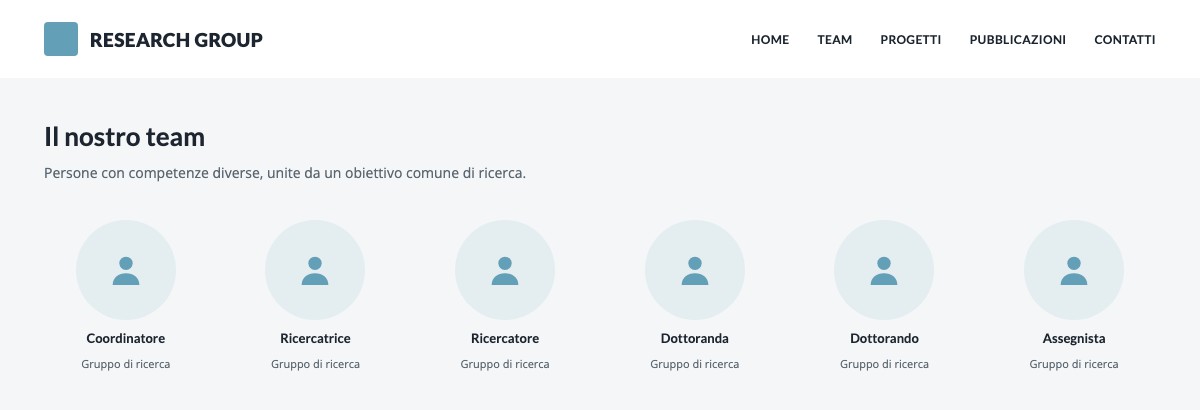
The website needed to represent a range of different areas of expertise and bring together the institutional presentation, people, research areas, projects, publications, teaching activities, opportunities for students, and contacts. The complexity couldn't be eliminated: it had to be turned into a structure that people could explore.
My contribution
I analyzed the group's content and needs, defined the architecture and navigation, developed the digital identity starting from an existing logo, designed the desktop and mobile interfaces, and took care of reviewing, organizing, and entering the content. Finally, I developed and configured the website in WordPress, attending to responsive design, accessibility, SEO, and maintenance.
Key decisions
Organizing the site around visitors' intentions
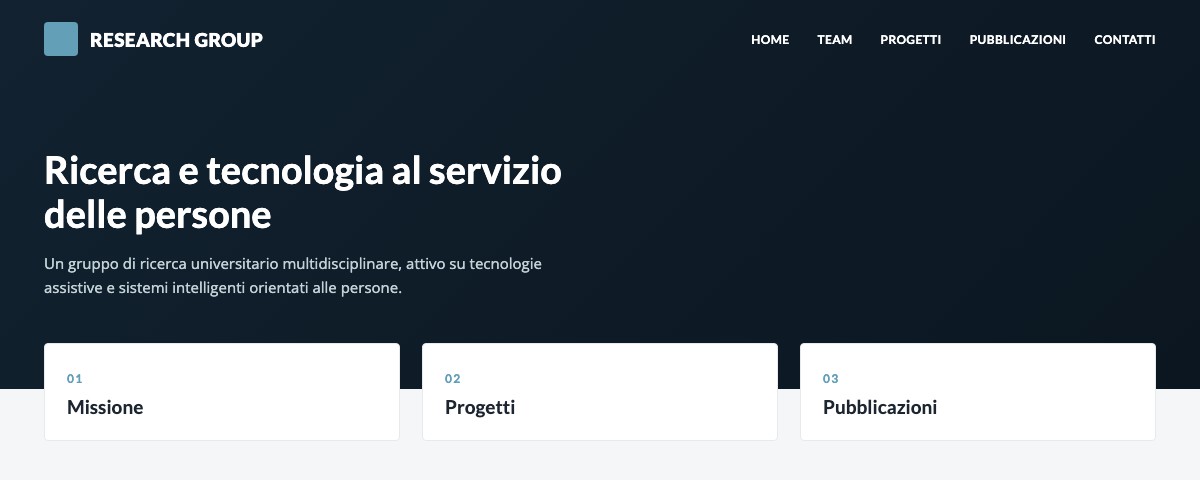
The structure responds to five needs: understanding the group's identity and mission, getting to know the people, exploring the projects, browsing the publications, and finding activities or opportunities. The homepage points visitors toward these areas; the inner pages scale back visual elements to favor easy reading.
Making different projects comparable
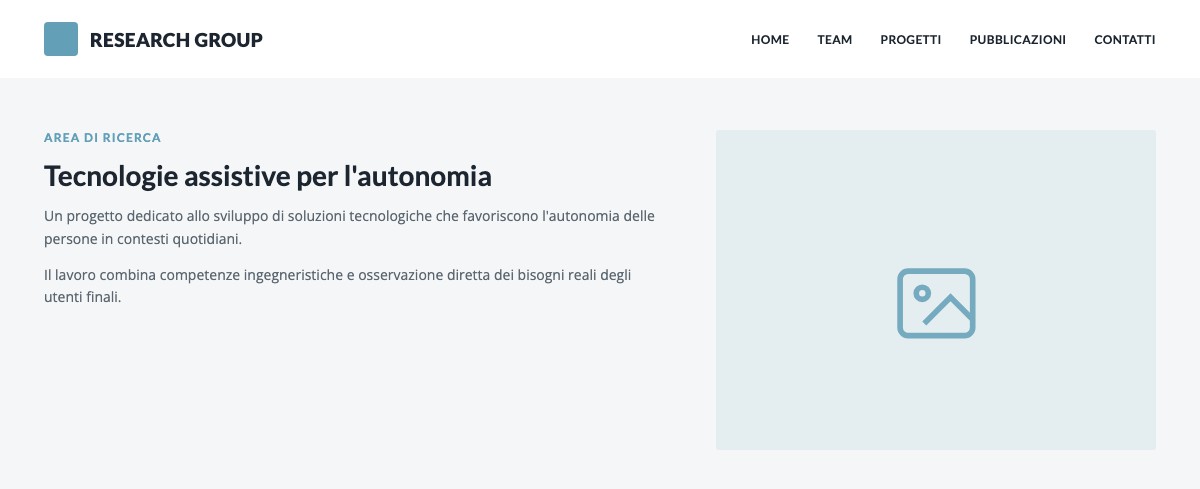
Activities are organized by research area. The detail pages use flexible modules, able to accommodate varying amounts of text, images, and scientific references without losing consistency.
Separating content for students
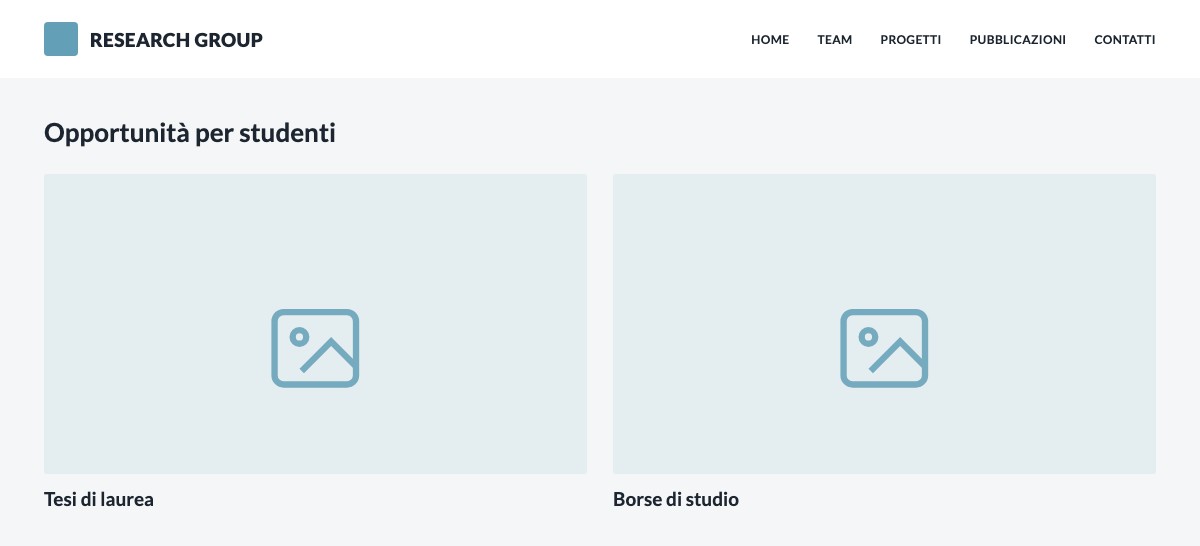
Theses, teaching activities, and opportunities are gathered in a dedicated space accessible from the homepage. This separation helps a specific audience quickly find operational information.
Balancing technology and readability
The visual direction draws on the colors of the existing logo. More immersive openings communicate the group's scientific character, while the informational sections use light surfaces, essential typography, and white space.
Result and reflection
The result is a complete, easily updatable institutional website, able to bring together the group's identity, scientific output, projects, and opportunities in a single system. The project allowed me to independently coordinate design, content, implementation, and maintenance while working directly with an academic organization.
When many pieces of content carry equal importance, designing doesn't mean cutting them down arbitrarily: it means building relationships, priorities, and paths that help different audiences find what they need.