

Roma in Prospettiva
A photography exhibition tracing the story of TracciaRoma and opening it up to the community.
How can an exhibition tell the story of an association's identity while still leaving room for the perspectives of the people moving through it?
In short
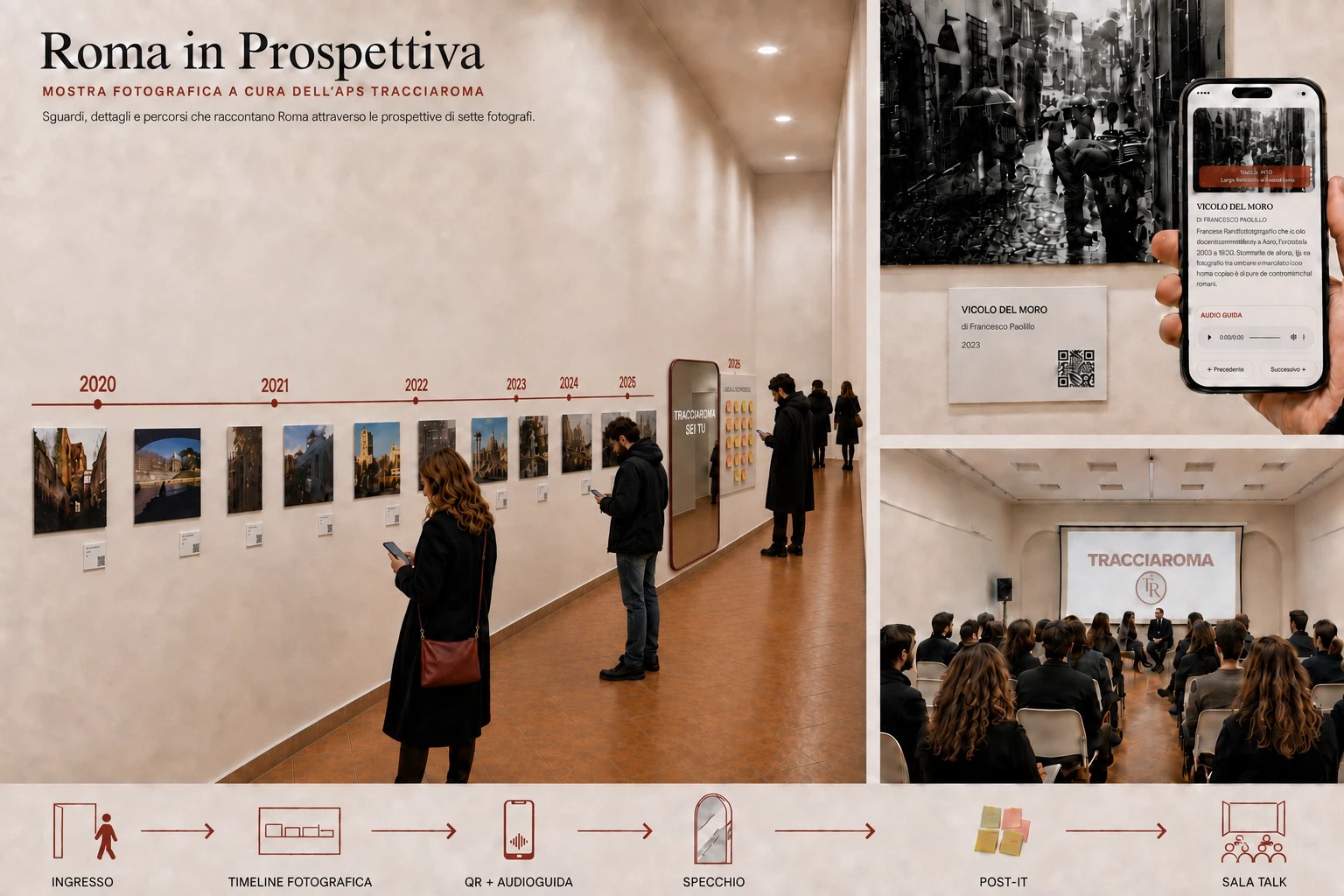
Roma in Prospettiva is a photography exhibition created for the launch event of the TracciaRoma association in December 2025. Photographs by seven authors told the story of Rome through different perspectives, arranged along a chronological path connecting the project's origins to its evolution. The physical experience of the works was accompanied by digital content and audio guides accessible via QR code. The journey ended with a mirror, an invitation to participate and a space for visitors' contributions. More than a hundred people attended the event.
The challenge
The association's launch needed to be more than an institutional presentation. The experience had to make visible the path TracciaRoma had already travelled, communicate its identity, and point toward its future direction: building a community able to value different perspectives on the city.
The exhibition also had to connect three dimensions: the photographs and the physical space, the digital deep-dives, and the participation of the people attending.
My contribution
I worked on the concept and curation of the exhibition, designing the timeline and the way the works would guide visitors along the corridor. I collaborated on writing the texts, personally produced the audio guides, and designed the web interfaces linked to the photographs from scratch.
I directed and built the exhibition setup with the physical support of other people. For the closing moment, I designed the slides and coordinated the talk together with the other members of the TracciaRoma team.
A story built in space
The corridor became a timeline. The photographs of Rome, arranged chronologically, represented the different perspectives of the seven authors and guided visitors from the birth of TracciaRoma to the present.
The sequence turned physical movement into a narrative: moving through the exhibition meant passing through the project's milestones and gradually understanding its evolution.
From photography to listening
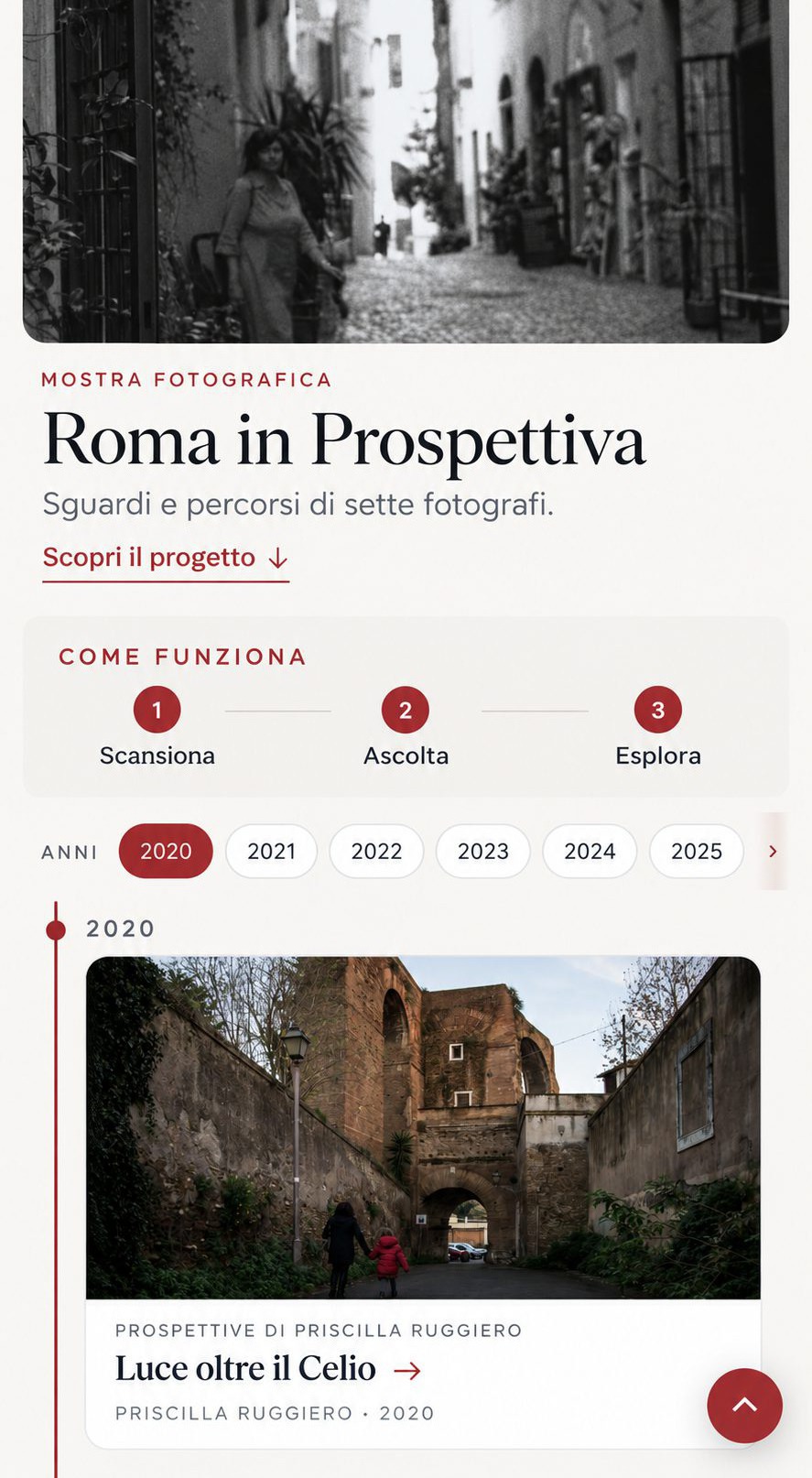
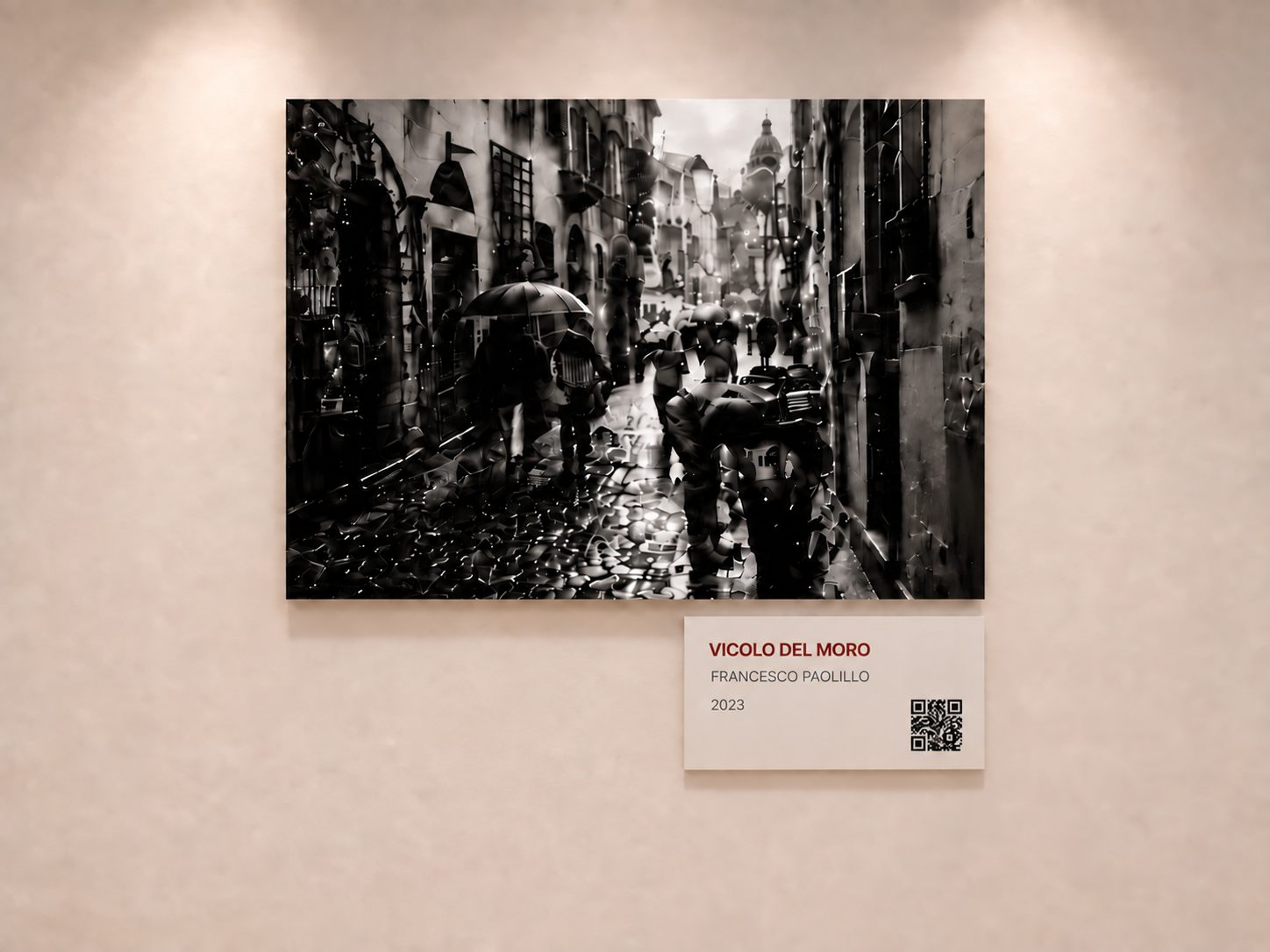
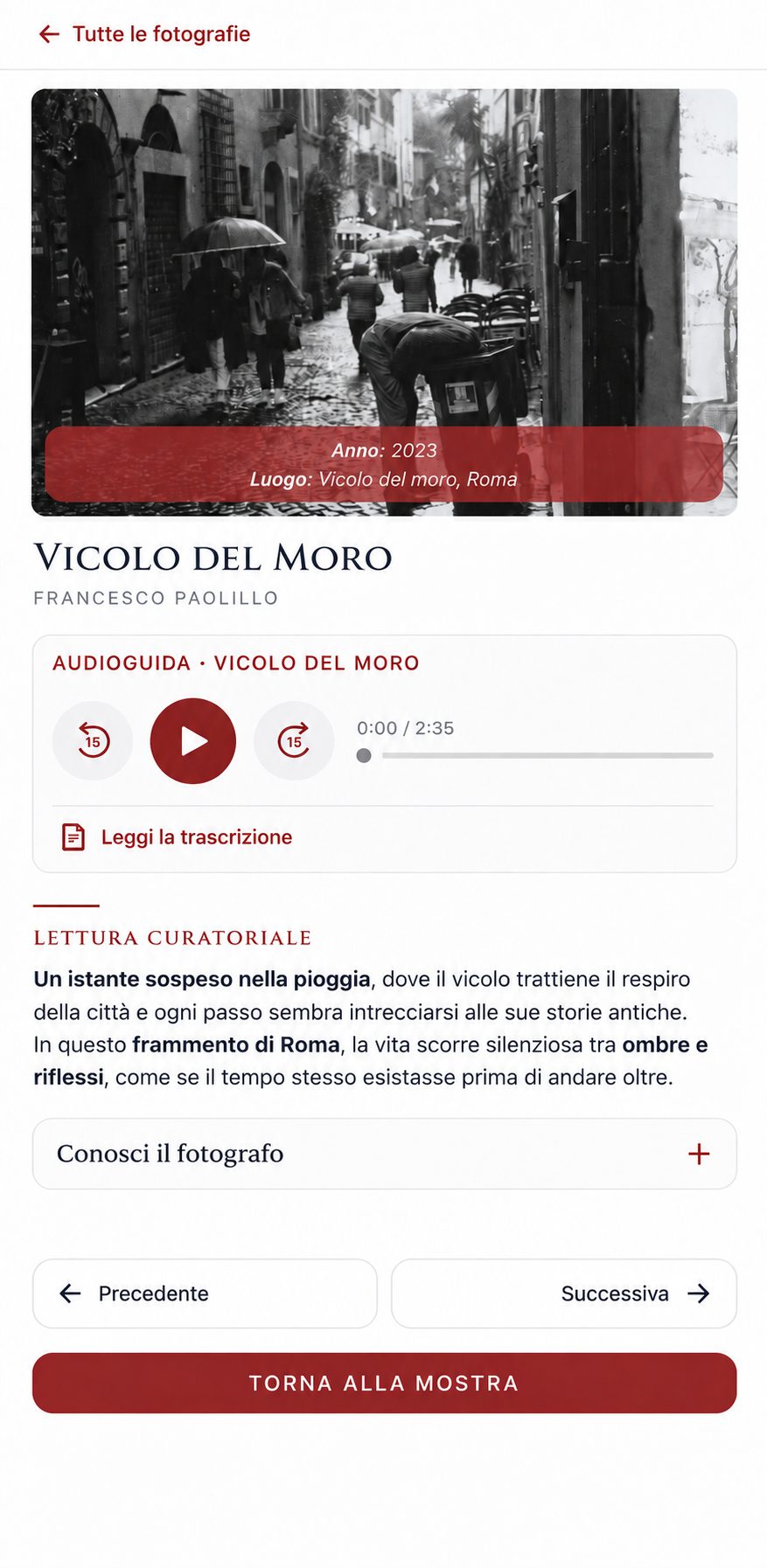
Each work was accompanied by a descriptive plaque and a QR code. Scanning it opened a deep-dive page designed specifically for the exhibition, featuring the image, the text, and a dedicated audio guide.
The digital component didn't replace the experience in the space, but added an audio mode of engagement and allowed visitors to linger on each photograph's story at their own pace.
“TracciaRoma sei tu” (“TracciaRoma is you”)
At the end of the timeline, a mirror displayed the phrase “TracciaRoma sei tu” (“TracciaRoma is you”). After observing the city through the photographers' eyes, visitors met their own reflection.
The mirror marked the shift from recounting the past to opening up the association: TracciaRoma wasn't presented as something finished, but as a space to be built through the voice and contribution of whoever decides to take part.
Leaving a trace
The exhibition journey ended with a surface dedicated to sticky notes. Visitors could leave a comment, a thought, or share an idea. This simple gesture turned the exhibition's conclusion into a space for listening, offering an early snapshot of the people getting closer to the new association.
From journey to dialogue
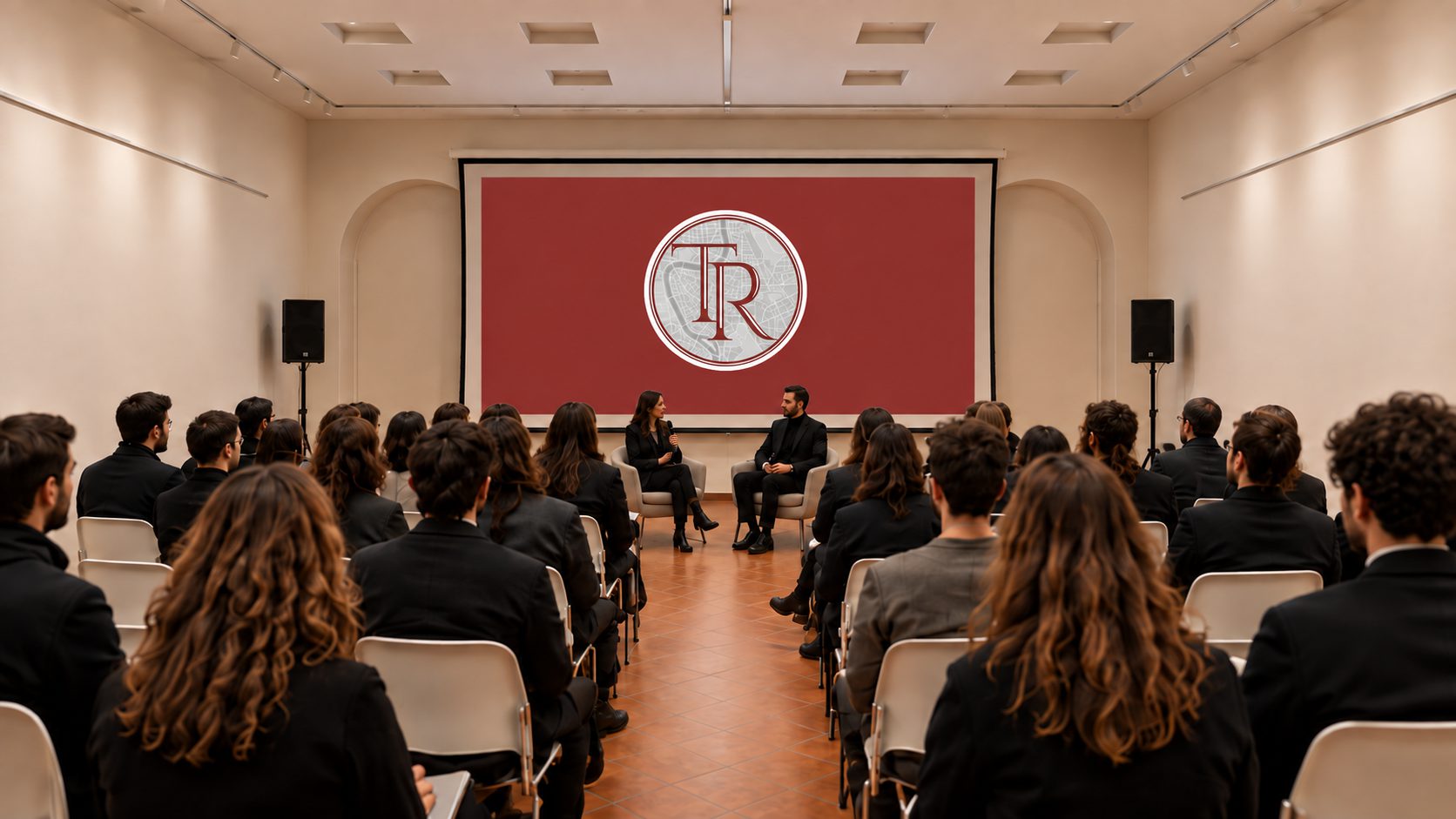
At the end of the corridor, a room with seating and a projector hosted the talk presenting TracciaRoma's 2026 programme. The event's layout built a coherent progression: first the individual experience of the photographs, then a personal contribution, and finally a collective moment of storytelling and dialogue.
I created the presentation slides and coordinated the talk together with the other team members.
Outcome and reflection
The event involved seven photographers and welcomed more than a hundred people. The exhibition, the digital interfaces, the audio guides, the participatory space, and the talk came together as a single experience, able to tell TracciaRoma's story and introduce its new dimension as an association.
This project let me work on experience as a system: content, space, pacing, digital interaction, and participation all had to support the same story. The most important decision was not to limit the exhibition to showing what TracciaRoma had been, but to close the journey by giving people a role in its evolution.